Follow via RSS, Mastodon, Telegram or email.

Speaking of Backblaze and System Settings, though: this beauty is fresh of the presses in 27.0.1 – probably more Backblaze’s “fault” than Apple’s, given how extremely non-native their Java app is, but still. What a mess.

The Backblaze preferences themselves also had this highlight:

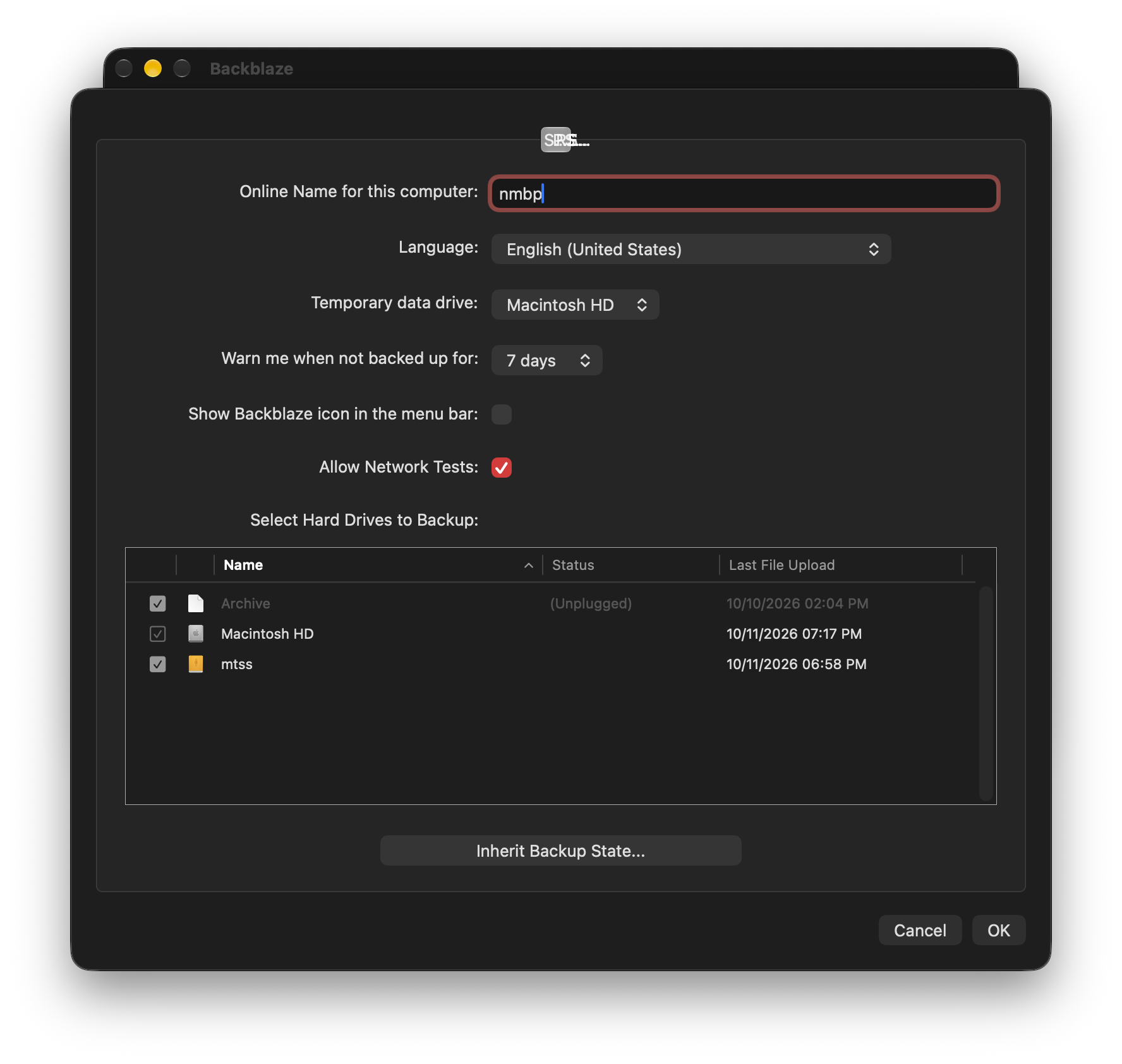
Backblaze macOS preferences with a tab bar that has all tabs condensed on top of each other within just a couple dozen pixels – not a single tab title is readable.

You might not even see it at first, but this window has tabs on top. Six of them, actually, each with a full word as title. When you click into this black hole of UI elements, they unfold and show up normally (until you reopen the window).

However, all this is – again – not even what I initially wanted to investigate. But the state of software quality on macOS is so in the gutter now that you can barely click twice without encountering some bug. Granted, not necessarily terrible bugs, but bugs nonetheless. Must be all that amazing productivity that “AI” is unlocking, hooray.

The reason I went into these preferences in the first place is that I no longer saw the Backblaze menubar item after upgrading my personal laptop to Golden Gate.1 As you see above, the menu bar item checkbox is unchecked. I didn’t uncheck it. I also don’t really remember checking it, but it’s probably been ten years since I initially configured this. You can already guess what happens when I do check the box and press OK, right? Exactly, nothing happens – and the box is unchecked again if you go back.

Backblaze doesn’t show a version number anywhere, the “About Backblaze” item in the menu bar can be clicked but doesn’t open anything, and it doesn’t have a manual update check. Just to be sure I wasn’t writing about a problem they already fixed, I went to download the installer manually – fun little game, by the way: go to their website and see how long it takes you to find those downloads.

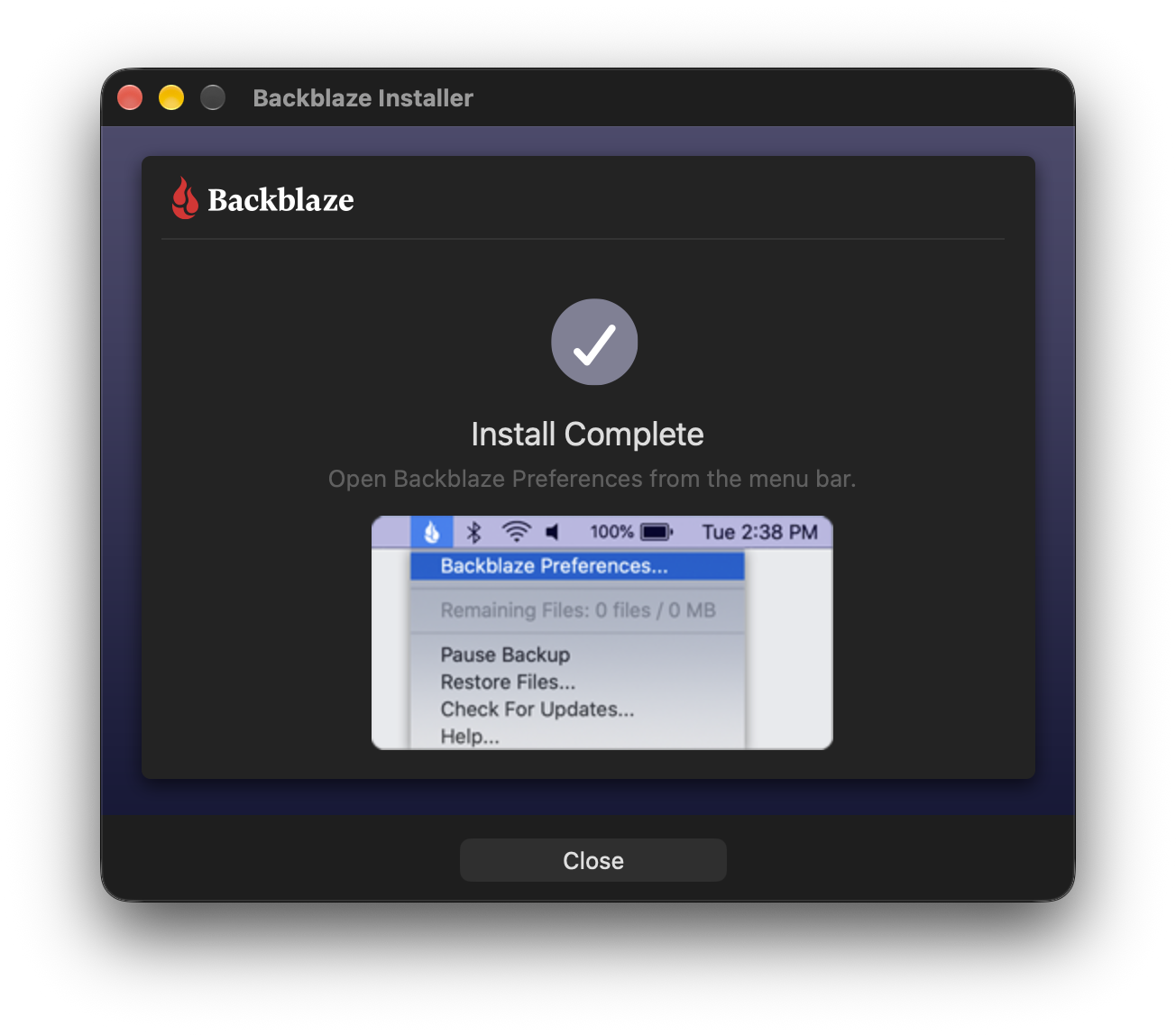
After the installation of the newest version was finished, the following dialog was shown. Of course this didn’t fix the problem, so I’d say that’s pretty solid comedic timing.

The Backblaze installer showing a dialog that specifically mentions the menu bar item as the way to interact with the software.

(Yes, I’m aware that there is a menubar item permissions list in macOS now – there’s no Backblaze entry there at all. Maybe that’s actually the problem, but unlike some other permissions you can’t manually add entries to this list.)


  1. Liquid Glass is still not even remotely usable or even nearing “acceptable” level on macOS, no matter how capable of gaslighting themselves into believing so some people seem to be. ↩︎

All these screenshots are a couple of weeks old – I took them while my personal laptop was still holding out on 15.8, when reproducing something I had encountered on my work machine which had already been forced into macOS 26’ ugliness.

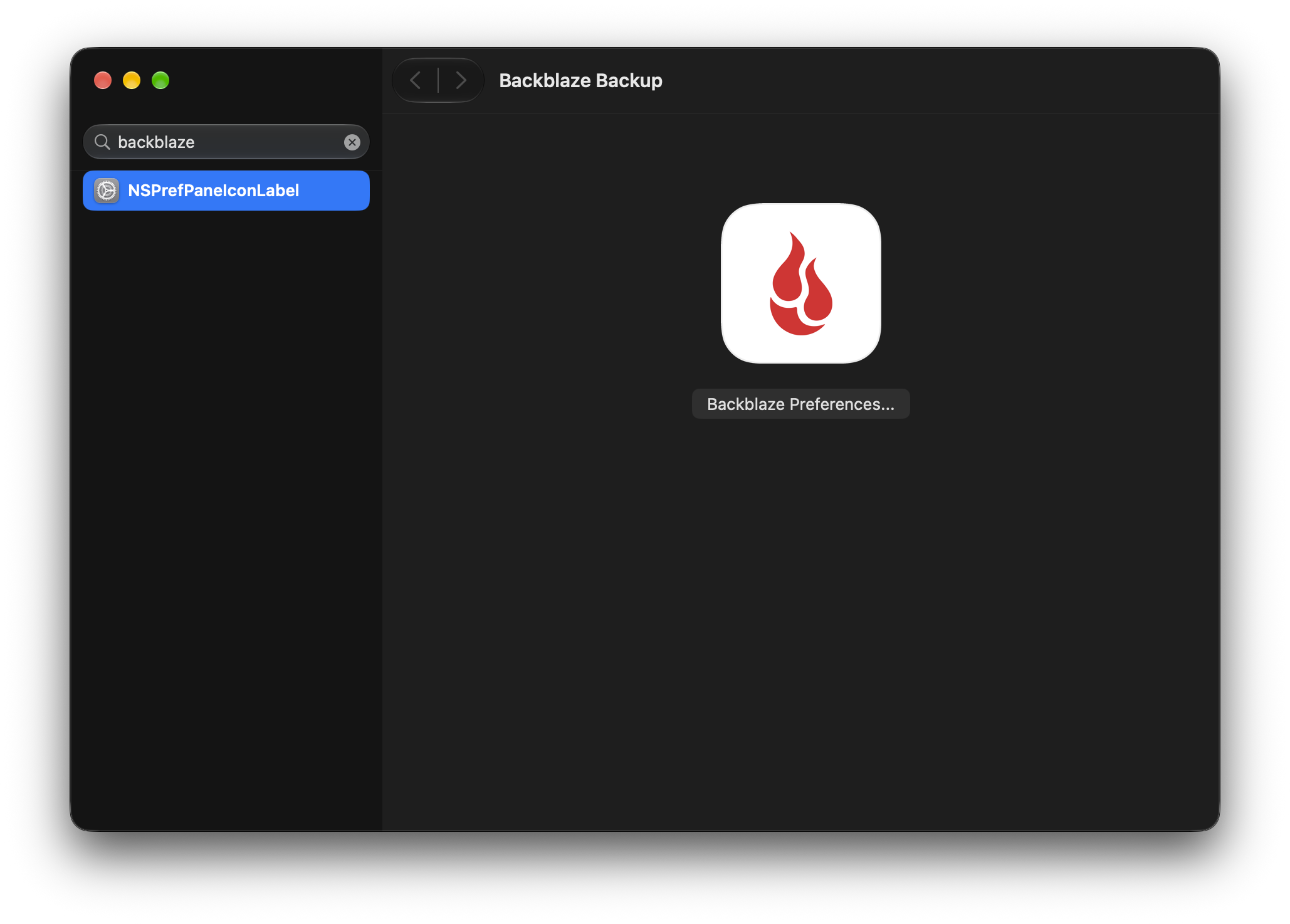
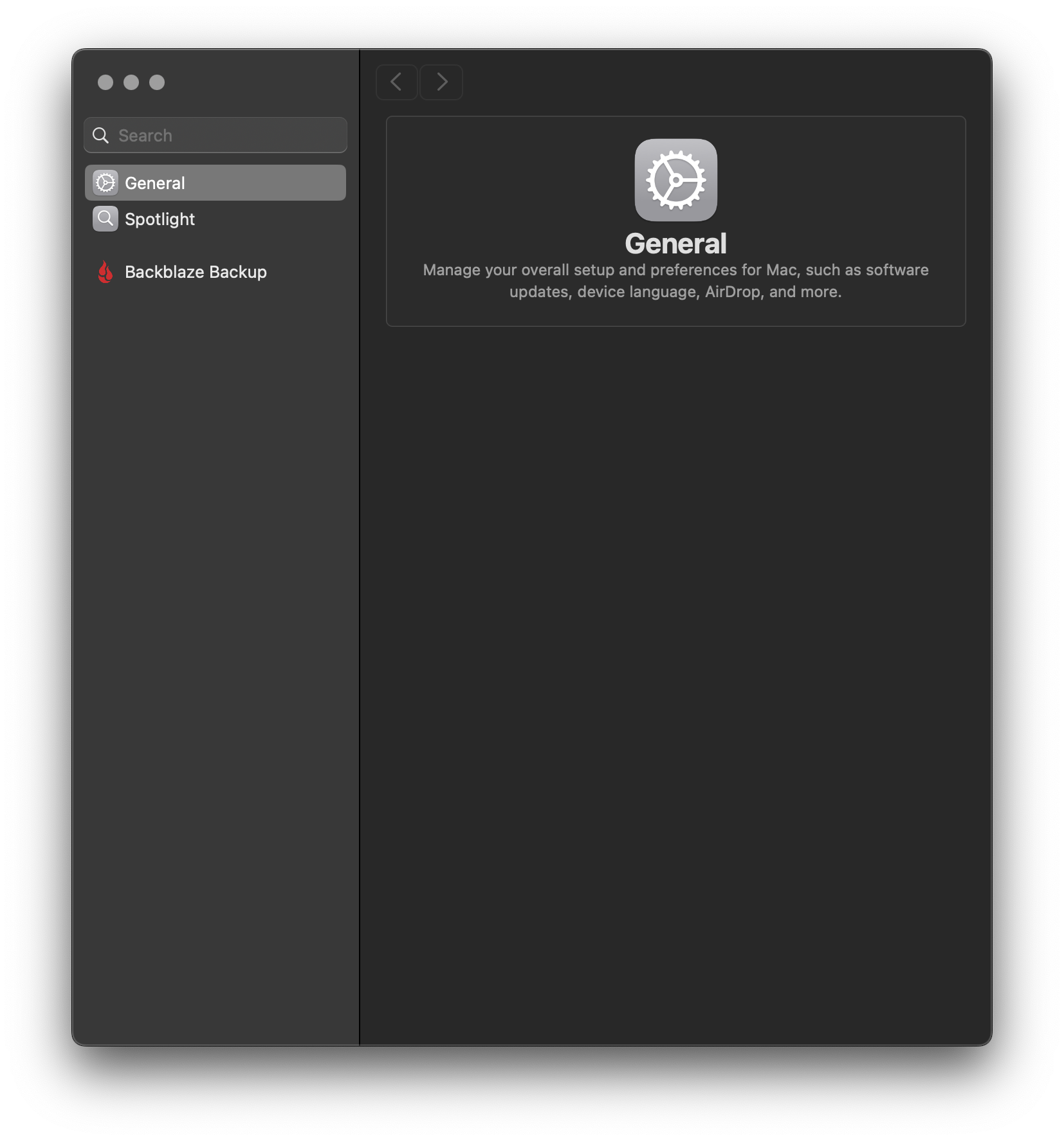
The header photo above is a bonus bug which I only encountered while trying to reproduce the actual problem I wanted to highlight here. I can’t say that I encountered this again since, but what a bizarre stroke of “luck” that exactly when I specifically needed to interact with System Settings to verify if some broken behavior was already present in 15.8, it would greet me with this very empty state. Searching for anything didn’t yield results, clicking on Spotlight or Backblaze didn’t do anything. Quitting the app notably did not fix it, I had to reboot.


What I actually wanted to show was this, though:

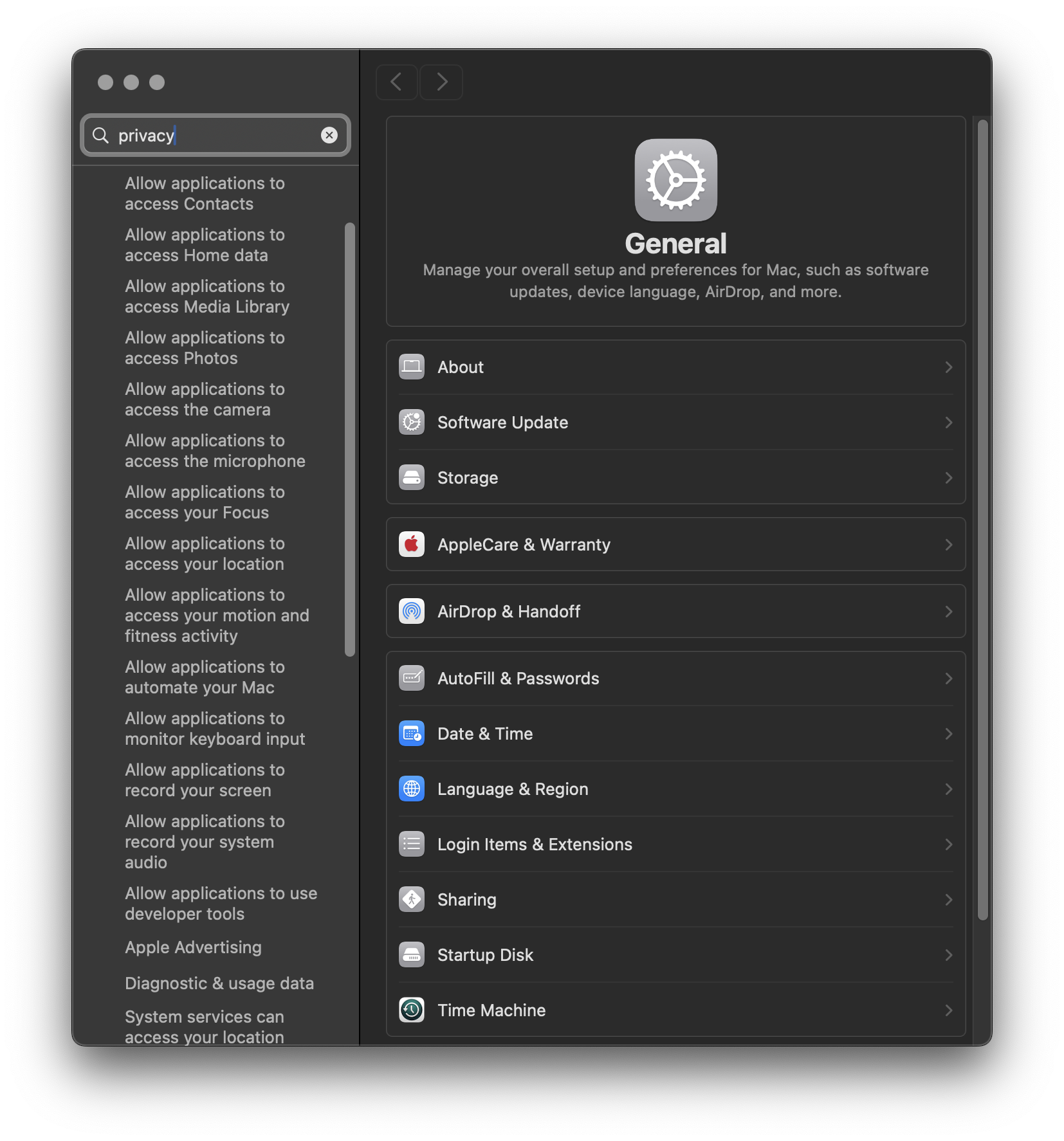
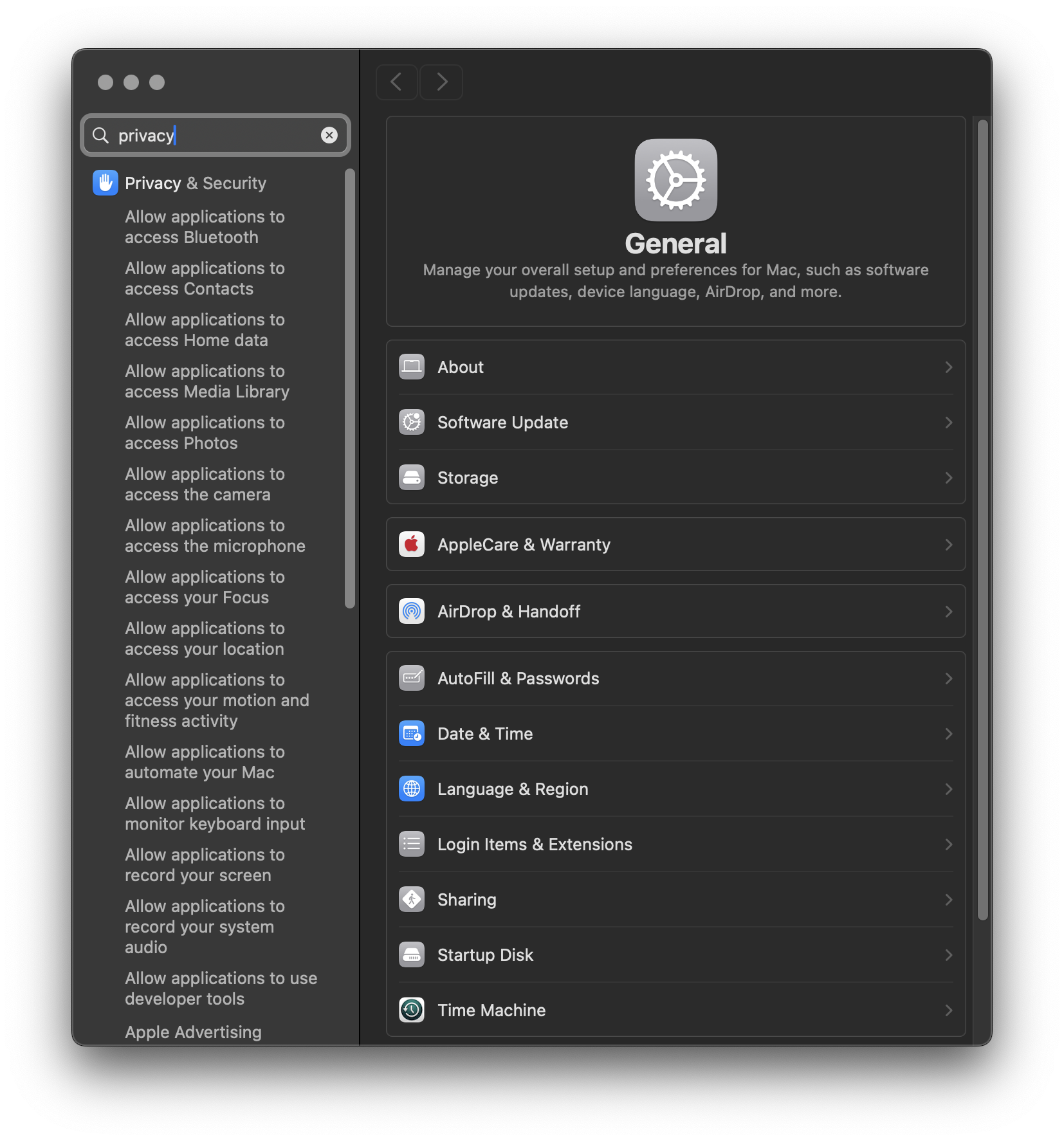
System Settings with a search for “privacy” but the results are scrolled incorrectly so the section header that contains the word is not visible.

Despite normal macOS usage now requiring a trip into Privacy & Security on a regular basis, I still find the new UI so disorienting that I usually resort to searching for what I need. When I did so this time, I thought something must be broken – none of these results mention “privacy” at all?!

After a couple of very confused seconds I realized what was going on – the scroll position of the search results sidebar was incorrect. I was able to reproduce this outcome consistently, both on 15.8 (might still have been 15.7?) and whatever exact version of 26 my work machine was on. Scrolling up manually solves the mystery:

System Settings with a search for “privacy”, showing the top-level “Privacy & Security” entry and an endless list of subsections that clutter the UI.

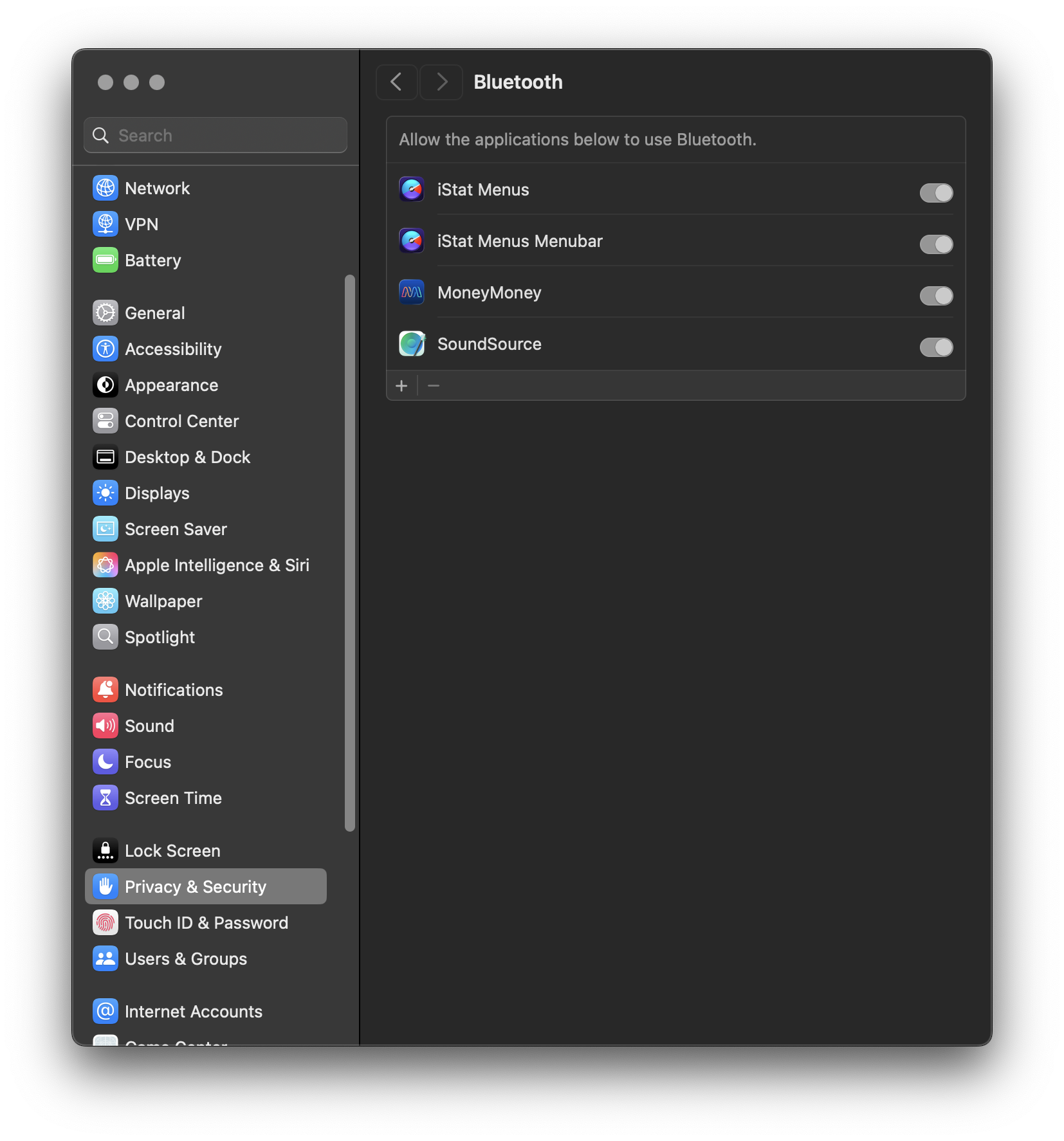
Now, just to be clear – this is still terrible without the scroll position bug. Why does it list every single subsection of the Privacy & Security section? It is not matching on any text in their name or content – let’s take a look at the very first subsection, allowing Bluetooth access:

The Bluetooth subsection of “Privacy & Security”, clearly showing that the search term “privacy” is nowhere to be seen.

The word “privacy” is nowhere to be seen.

Aside from the awful waste of space, this also lacks a sense of orientation. Nothing immediately tells me that we’re in a subsection of Privacy & Security. The only indication is the selected item in the left sidebar. Why is there no breadcrumb in the title, for example? The < > buttons on top don’t navigate through a hierarchy either, they navigate through history. Nothing inherently wrong with that, but the fact that you can go to a subsection a) through the hierarchy (i.e. you first click on Privacy & Security yourself, then on Bluetooth), or b) directly through search can result in history entries that make those buttons feel like they don’t follow a consistent pattern.

(This does look better in 27.0.1 – the subsection names are now the primary result text, and Privacy & Security is shown as secondary text with each one, so it is clearer why the results are what they are.)

Thanks to the power of Apple Intelligence I’m not missing any phishing emails from a bank I’ve never communicated with and a @gmail.com address.

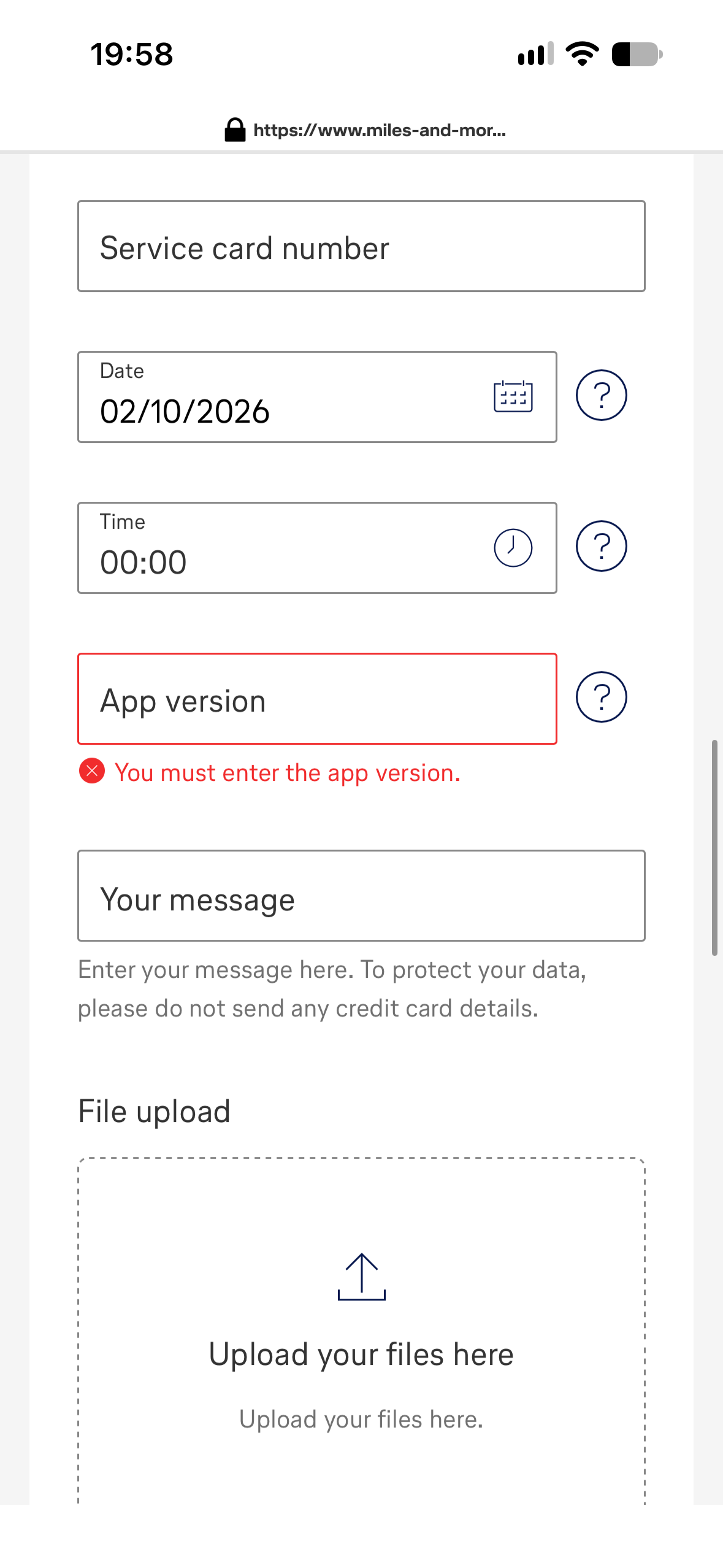
I’m not sure what’s sillier, asking for the Date and Time, or having the user submit the App version, in an unknown format while you are in the in-app browser of said app with no way to look up the version string. At least they didn’t validate the format, so I could submit “I’m using the in-app browser and can’t check” there.

Every time Claude Code uses the Chrome MCP it adds a new tab group, but it never cleans up after itself. This was of course already reported many times in the 5000+ open issues Claude’s GitHub.

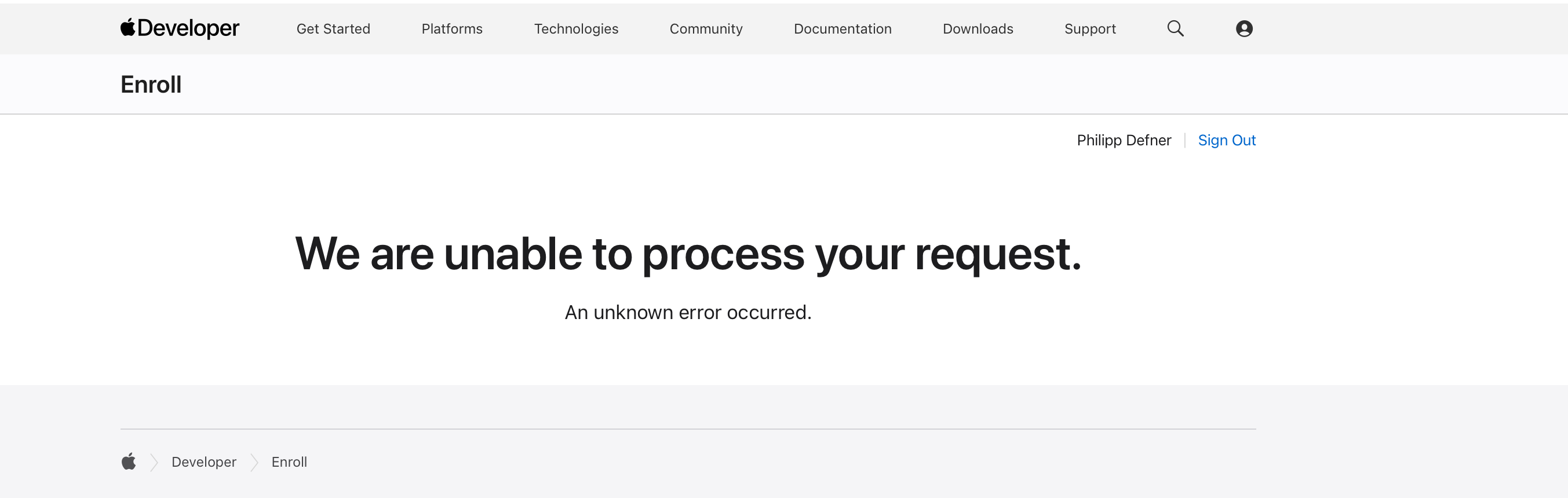
Trying to give Apple money is not always easy. I’ve later found out (Through Reddit of course, not through some helpful error message from Apple) that the your Apple Account’s 2FA phone number needs to be of the same country as your developer account…which doesn’t make any sense.

I’ve started seeing this more and more (using the latest version of iOS 26) lately. It happens across various apps, so it is probably an OS issue: The area where the keyboard would be is completely opaque with a solid color. Tapping there doesn’t do anything, and the rest of the UI just scrolls behind it as it would with the actual keyboard. Oddly it does not seem to happen when leaving a screen with the keyboard open (i.e. a failure to properly hide the keyboard when it should go away), but just randomly happens in screens where you wouldn’t use the keyboard at all.

Liquid Glass really shining at the stated goal of not being in the way of my precious content.

For more than a year now 1Password has a bug where it auto-locks itself every ~10 seconds on the machine you are connected to via screen sharing…but only if “High Performance” screen sharing is selected. This has also been discussed on the 1Password Forums already. I almost don’t want to know what kind of weird macOS edge case that bug hits.

Even when the tab bar is collapsed, the thumb is still inexplicably un-grabbable if it’s below a certain threshold in the viewport. Although it’s hard to be sure if it’s actually broken or just a “skill issue” when the visible touch target is less than half a millimeter wide. (As it is on my 13 mini…)

This is hard to show, I tried recording a video – but without seeing the finger itself it’s just nothing happening or the UI jumping around as the phone misinterprets it as dragging the entire application away into the app switcher. But it’s exactly as described on my larger screen (iPhone 14 Pro) as well: the scrollbar simply cannot be picked up for dragging anymore when it is far enough down and next to the URL bar.

Thanks for the submission!

It’s almost impressive what a miserable, useless piece of crap the Shortcuts app remains. First off: No actual concept of versioning or upgrades for shared shortcuts. Sharing shortcuts happens via weird iCloud URLs rather than being an actual aspect of the system. So to update a shortcut, do you just add it again? No indication of what that will do before you press the button. Will it error out? Will it create a duplicate? Will it update/replace the existing one?

Alright, just risk it – now iOS does offer reasonable choices. Take a wild guess what I picked in the second screenshot to end up with screenshot #3 – yes, of course I chose Replace and it kept both regardless. Not just that, for some weird reason it created two with the exact same name. Which one is newer? Of course this Playmobil-ass UI doesn’t show anything that would be remotely useful for serious people. Imagine wanting to sort your shortcuts by date or see the last modification date, like some rocket scientist. Well, not on this consumption device that costs more than a used car.

One of the duplicates was still able to run – the original I presume, because the workflow itself has implemented an update check and still told me there’s a newer version. The other one showed some cryptic error that I was too lazy to screenshot, and afterwards the state was screenshot #4: now they’re named differently. And for some reason sorted differently as well. But they still behave the same: One outdated, one broken.

I deleted the new one (with 1 at the end) and retried the process a few times – same result, it always created a broken duplicate of the existing shortcut despite picking Replace.